Original: $3.49
-65%$3.49
$1.22The Story
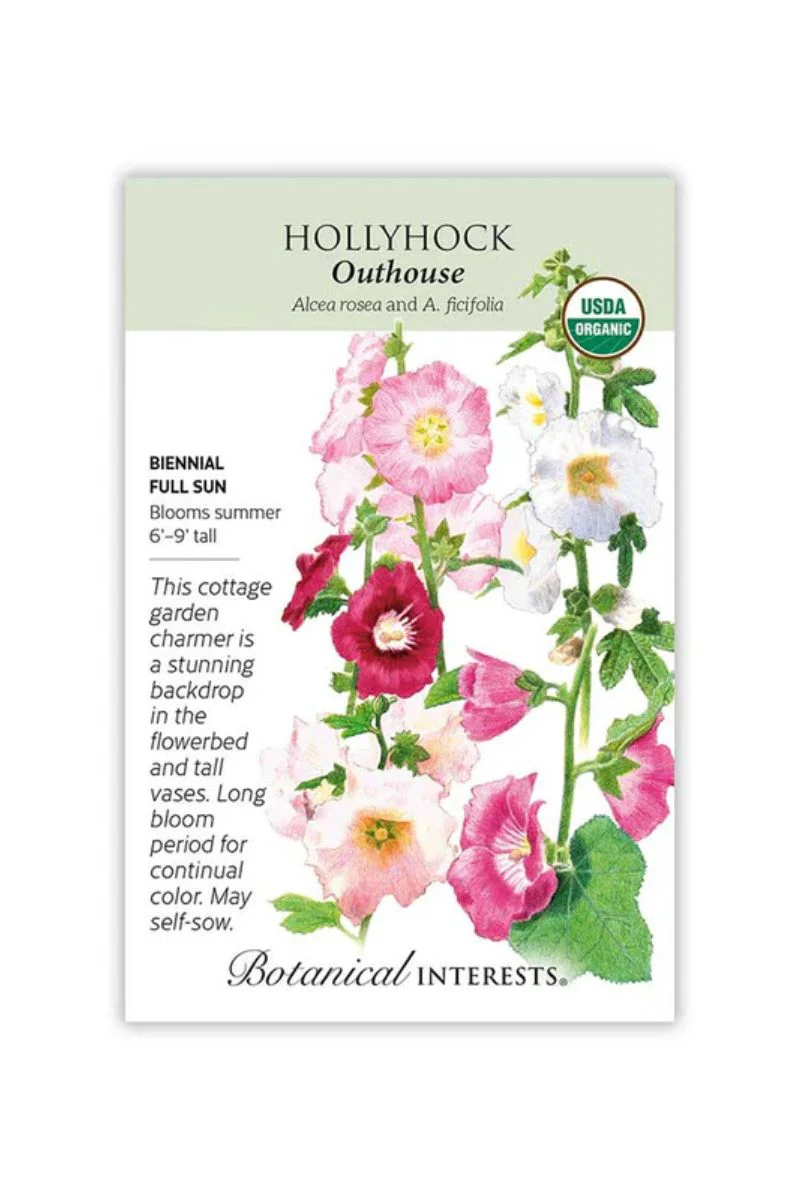
Once called "outhouse flowers", stunning hollyhocks were grown around outhouses because hollyhocks were tall enough to cover them, and also as a signal to guests where they were located. This hollyhock has a long bloom period, too! Hollyhock flowers are edible, but very bland; however, the large, colorful petals are lovely garnishing salads or desserts. (The flower's central disk, while edible, can be bitter.) Fairly drought tolerant but performs best with ample moisture and rich soil; otherwise, practically care free.
When to Sow Outside: RECOMMENDED. 1 to 2 weeks after your average last frost date, or 2 months before your average first fall frost date.
When to Start Inside: 6 to 8 weeks before your average last frost date. Roots are sensitive to disturbance; sow in biodegradable pots that can be planted in the ground.
Days to Emerge: 10–14 days
Seed Depth: Press into surface
Seed Spacing: A group of 3 seeds every 24"–36"
Thinning: When 3" tall, thin to 1 every 24"–36"
Description
Once called "outhouse flowers", stunning hollyhocks were grown around outhouses because hollyhocks were tall enough to cover them, and also as a signal to guests where they were located. This hollyhock has a long bloom period, too! Hollyhock flowers are edible, but very bland; however, the large, colorful petals are lovely garnishing salads or desserts. (The flower's central disk, while edible, can be bitter.) Fairly drought tolerant but performs best with ample moisture and rich soil; otherwise, practically care free.
When to Sow Outside: RECOMMENDED. 1 to 2 weeks after your average last frost date, or 2 months before your average first fall frost date.
When to Start Inside: 6 to 8 weeks before your average last frost date. Roots are sensitive to disturbance; sow in biodegradable pots that can be planted in the ground.
Days to Emerge: 10–14 days
Seed Depth: Press into surface
Seed Spacing: A group of 3 seeds every 24"–36"
Thinning: When 3" tall, thin to 1 every 24"–36"