The Story
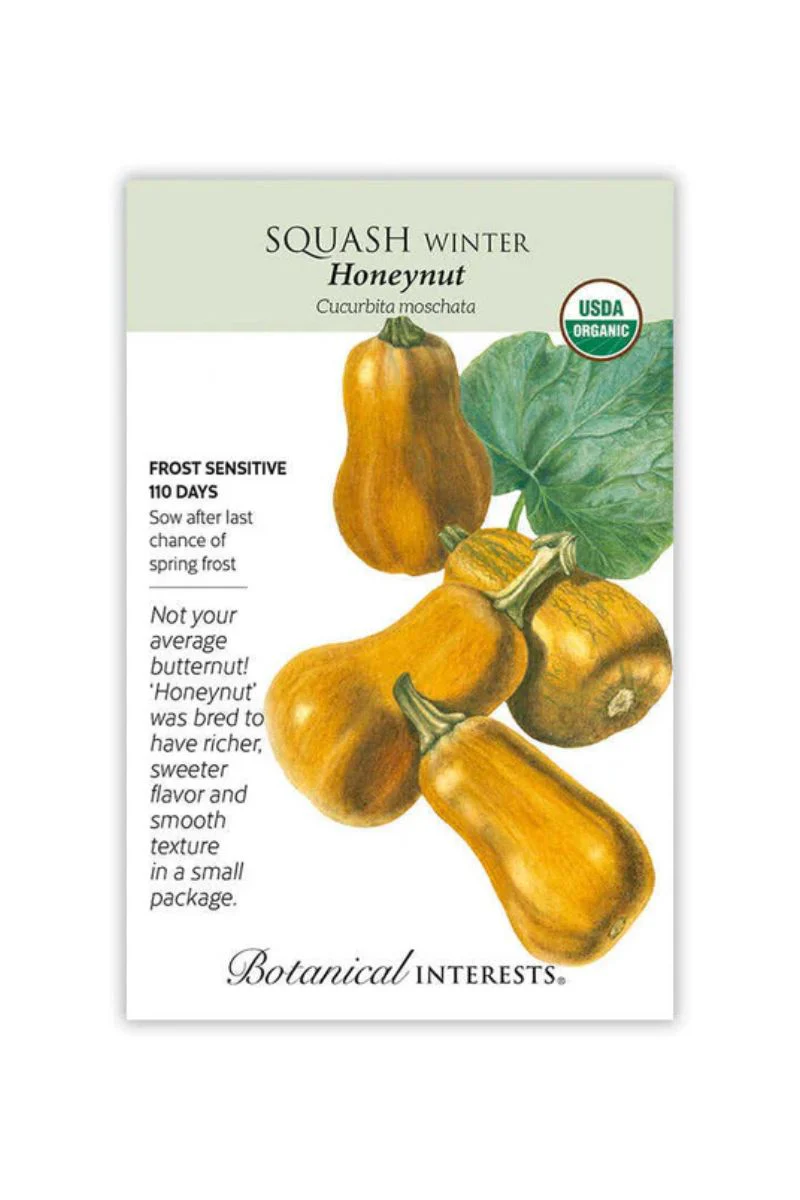
A renowned farm-to-table chef and a Cornell breeder worked for 6 years, crossing the flavorful, savory butternut with the sweet buttercup, to create this more manageable, 4"–5" butternut. The thin, edible skin signals ripeness by turning from green to terracotta, either on or off the plant. Compact vines are great for containers or trellises. Plants are resistant to powdery mildew and squash vine borers. Stores up to 6 months.
When to Sow Outside: RECOMMENDED. 1 to 2 weeks after your average last frost date, and when soil temperature is 70°–85°F.
When to Start Inside: Not recommended except in very short growing seasons, 2 to 4 weeks before your average last frost date. Roots sensitive to disturbance; sow in 4" biodegradable pots that can be planted directly into the ground. Transplant when soil temperature is at least 60°F.
Days to Emerge: 5–10 days
Seed Depth: 1"
Seed Spacing: 2–3 seeds per mound
Row Spacing: 4'–6'
Thinning: When 3" leaves, thin to 1–2 per mound
Description
A renowned farm-to-table chef and a Cornell breeder worked for 6 years, crossing the flavorful, savory butternut with the sweet buttercup, to create this more manageable, 4"–5" butternut. The thin, edible skin signals ripeness by turning from green to terracotta, either on or off the plant. Compact vines are great for containers or trellises. Plants are resistant to powdery mildew and squash vine borers. Stores up to 6 months.
When to Sow Outside: RECOMMENDED. 1 to 2 weeks after your average last frost date, and when soil temperature is 70°–85°F.
When to Start Inside: Not recommended except in very short growing seasons, 2 to 4 weeks before your average last frost date. Roots sensitive to disturbance; sow in 4" biodegradable pots that can be planted directly into the ground. Transplant when soil temperature is at least 60°F.
Days to Emerge: 5–10 days
Seed Depth: 1"
Seed Spacing: 2–3 seeds per mound
Row Spacing: 4'–6'
Thinning: When 3" leaves, thin to 1–2 per mound